
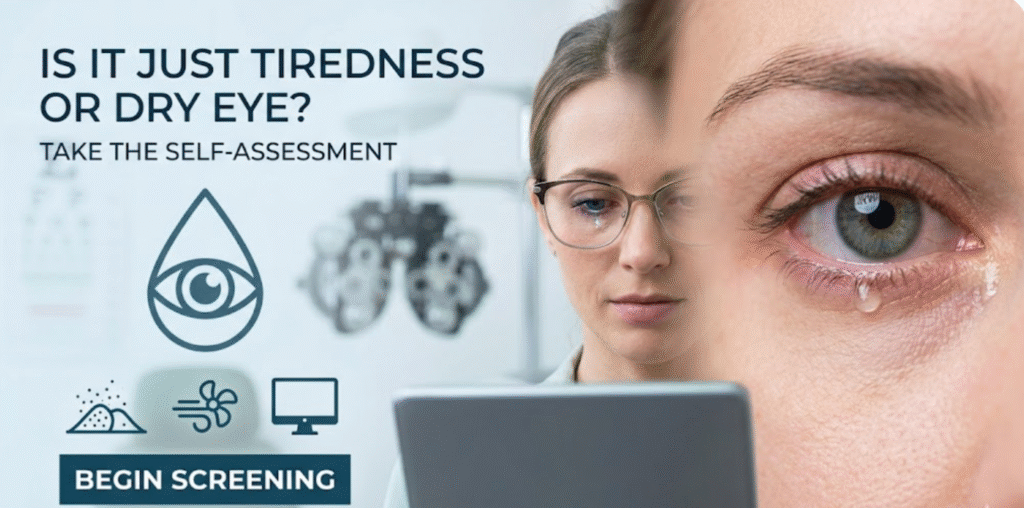
Dry Eye Screening Questionnaire
Is It Just Tiredness, or Is It Dry Eye Syndrome?
Many people dismiss gritty, red, or watery eyes as simple fatigue or allergies. However, chronic dry eye (Ocular Surface Disease) is a clinical condition where your eyes either don’t produce enough tears or produce poor-quality tears that evaporate too quickly.
Left untreated, chronic dryness can lead to inflammation, blurred vision, and even permanent scarring of the corneal surface.
Common Symptoms of Ocular Surface Disease
- Reflex Tearing: Paradoxically, your eyes may water excessively as they try to compensate for dryness.
- Fluctuating Vision: Vision that clears up momentarily after a heavy blink.
- The “Gritty” Feeling: A sensation like a foreign body or sand is stuck under your eyelid.
- Contact Lens Intolerance: Difficulty keeping lenses in for a full day.
Take the Assessment
We use a screening process based on the Ocular Surface Disease Index (OSDI), the clinical gold standard for measuring dry eye severity. Use the tool below to calculate your score and understand your risk level.
Dry Eye Self-Assessment
A clinical screening tool for ocular surface health.
Clinical Note: This assessment is a screening tool based on common OSDI metrics. It is for informational purposes and does not replace an eye examination by an optometrist.
FAQ
Q: What is the most common cause of dry eyes?
While aging and environment play a role, Meibomian Gland Dysfunction (MGD) is a leading cause. This occurs when the oil-producing glands in your eyelids become blocked, causing your tears to evaporate too fast.
Can digital screens cause dry eye?
Yes. "Computer Vision Syndrome" often involves a reduced blink rate. When you stare at a screen, you blink up to 60% less than normal, preventing the eye from being properly lubricated.
Are eye drops enough to treat dry eye?
Over-the-counter artificial tears provide temporary relief by adding moisture, but they don't treat the underlying cause of inflammation or gland blockage. A clinical assessment is necessary to determine if you need prescription drops or in-office therapies.

Optometry education for Optometry students and eye care professionals. Managed by qualified optometrists. For informational purposes only — not a substitute for professional eye care.