
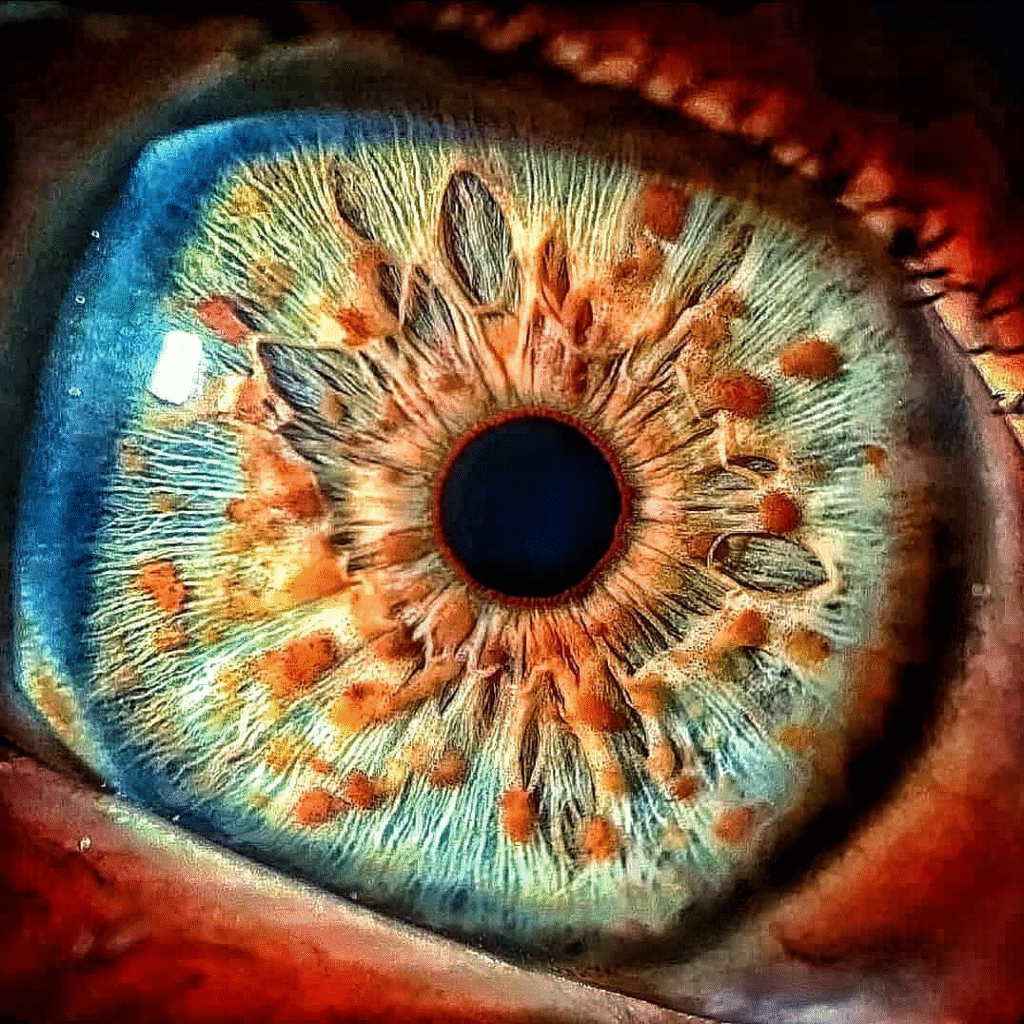
Lisch nodules are benign melanocytic hamartomas of the iris. A hamartoma means an overgrowth of normal tissue elements arranged in a disorganized manner, not a tumor or malignancy. These nodules are one of the most important ocular findings associated with Neurofibromatosis Type 1 (NF1), also known as von Recklinghausen disease.
Ocular Appearance
On slit-lamp examination, Lisch nodules appear as:
- Small, well-defined dome-shaped elevations
- Yellow-brown to tan in color
- Located on the anterior surface of the iris
- Usually multiple and bilateral
- They do not distort the pupil or affect visual acuity
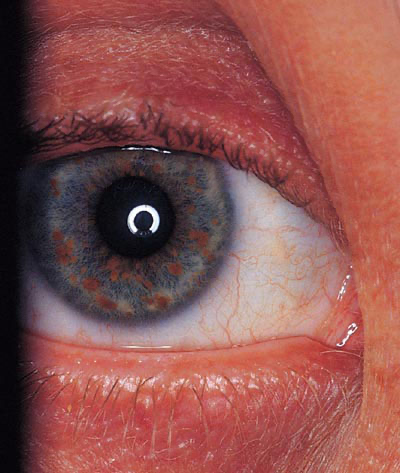
Image credit –Dr. Fermín Lobo
Diagnostic Importance
Lisch nodules are considered pathognomonic for Neurofibromatosis Type 1, meaning their presence strongly supports the diagnosis in the appropriate clinical setting. They typically develop after early childhood and increase in number with age, making them particularly useful in diagnosing NF1 in older children and adults.
Associated Systemic Features of NF1
Because NF1 is a multisystem genetic disorder affecting neural crest–derived tissues, patients may also have:
- Café-au-lait macules
- Axillary or inguinal freckling
- Cutaneous neurofibromas
- Optic pathway gliomas (especially in children)
- Skeletal abnormalities
Clinical Relevance for Eye Care
Although Lisch nodules themselves are harmless and do not require treatment, their recognition is crucial. Detecting them during routine eye examination should prompt systemic evaluation and monitoring, particularly in children, due to the risk of optic pathway tumors and other complications.
In summary: Lisch nodules are benign iris hamartomas but serve as an important ocular marker of Neurofibromatosis Type 1, making careful slit-lamp examination essential in suspected cases.