
Transition Lenses: Who They’re For and Why They’re a Smart Choice
Eyewear today is no longer just about clear vision—it’s about comfort, protection, and adapting to modern lifestyles. Transition lenses, also called photochromic lenses, have completely changed how many people experience their everyday vision. In clinical practice, I’ve seen how these lenses simplify life for patients who move constantly between indoor and outdoor environments.
If you’re wondering whether transition lenses are worth considering, this guide will help you understand how they work, who benefits most, and what to expect from them.
What Exactly Are Transition Lenses?
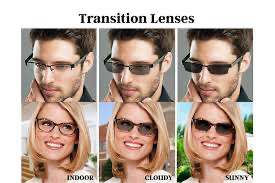
Transition lenses are smart eyeglass lenses that automatically adjust their tint based on light exposure. Indoors, they remain clear like regular prescription lenses. When exposed to sunlight, they darken to reduce glare and protect the eyes.
This change happens because of photochromic molecules embedded within the lens. These molecules react to ultraviolet (UV) light, triggering the darkening process. When UV exposure reduces, the lenses gradually return to a clear state.
The result is a single pair of glasses that functions as both everyday eyewear and sunglasses.
How Do Transition Lenses Work?
The technology behind transition lenses is both advanced and reliable. When UV rays hit the lens surface, photochromic molecules undergo a chemical change that allows them to absorb light, causing the lens to darken. Once UV exposure stops—such as when you move indoors—the molecules return to their original state, and the lenses clear up.
Modern transition lenses go a step further by responding not only to UV rays but also to high-energy visible (blue) light. This makes them especially useful for people who spend long hours on digital devices, helping to reduce eye strain and visual fatigue.
Who Benefits Most from Transition Lenses?
Transition lenses are suitable for many age groups and lifestyles. Some people, however, find them particularly beneficial.
1. People with Active Outdoor Routines
If you spend a lot of time outdoors—walking, commuting, exercising, or working—transition lenses provide constant UV protection without the need to switch glasses.
2. Individuals Sensitive to Bright Light
For those who experience discomfort or headaches in bright environments, transition lenses help reduce glare and soften harsh light automatically.
3. Professionals and Students
Teachers, students, healthcare workers, and professionals who frequently move between indoor and outdoor spaces benefit greatly from lenses that adapt instantly.
4. Drivers
Standard transition lenses do not darken fully inside cars because windshields block UV rays. However, newer versions designed for driving can respond to visible light, making them more effective on the road.
5. Heavy Digital Screen Users
People who spend hours on computers, tablets, or smartphones often experience eye strain. Transition lenses with blue light filtering can reduce discomfort caused by prolonged screen exposure.
6. Children
Children’s eyes are more vulnerable to UV damage. Transition lenses offer continuous protection without requiring separate prescription sunglasses, making them a practical and safe choice.
Key Advantages of Transition Lenses
Convenience
One pair of glasses adapts to multiple lighting conditions, eliminating the need to carry or switch eyewear.
UV and Blue Light Protection
Transition lenses block 100% of UVA and UVB rays and often filter harmful blue light, helping protect long-term eye health.
Reduced Eye Strain
By minimizing glare and adapting to light changes, these lenses reduce visual fatigue throughout the day.
Clean, Modern Appearance
They remove the need for clip-ons or multiple pairs of glasses, maintaining a polished and professional look.
Cost Efficiency
Instead of investing in both prescription glasses and sunglasses, transition lenses combine both functions into one.
Are There Any Limitations?
While transition lenses are highly practical, it’s important to be aware of a few points:
- Some lenses may retain a very mild tint indoors, especially in colder environments.
- Traditional versions do not fully activate inside vehicles unless they are specifically designed for driving.
- There may be a brief adjustment period when moving between lighting conditions.
These factors vary depending on the lens brand and technology used.
Choosing the Right Transition Lenses
When selecting transition lenses, consider the following:
- Tint Options: Gray, brown, and green are common choices, each affecting contrast differently.
- Lens Material: Polycarbonate lenses are impact-resistant, while high-index lenses are thinner and lighter.
- Lens Coatings: Anti-reflective and scratch-resistant coatings improve clarity and durability.
Your optometrist can guide you based on your prescription, lifestyle, and visual needs.
Final Thoughts
Transition lenses offer a practical, protective, and stylish solution for modern vision demands. From outdoor comfort to digital eye protection, they address multiple needs with one smart design. For many patients, they significantly improve visual comfort and daily convenience.
If you’re considering transition lenses, a professional eye consultation can help determine the best option for your routine and prescription. With today’s advanced technology, transition lenses are no longer just a convenience—they’re a valuable investment in long-term eye health.