
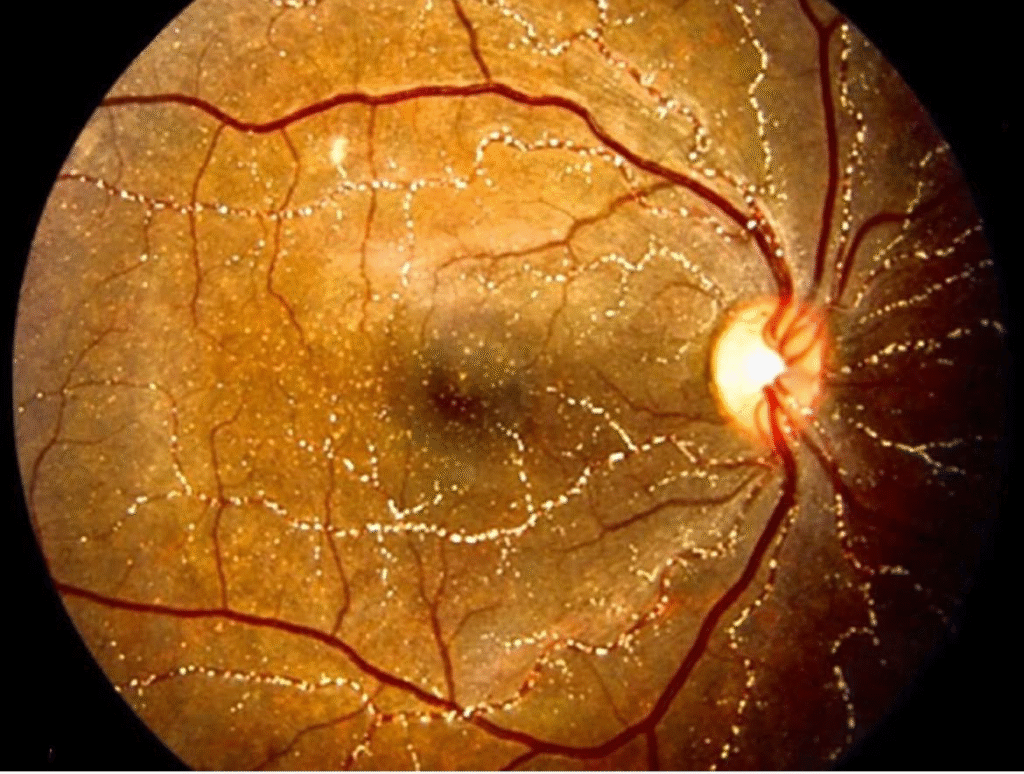
Methoxyflurane-Induced Crystalline Retinopathy: A Rare Toxic Retinal Disorder
Toxic retinopathies represent a unique and challenging category of retinal diseases, often emerging silently and progressing despite minimal clinical symptoms in early stages. One rare but clinically significant condition in this group is methoxyflurane-induced crystalline retinopathy — a retinal toxicity associated with cumulative exposure to methoxyflurane, an inhalational anesthetic previously used in surgical practice.
Case Presentation
A 47-year-old male presented with progressively worsening blurred vision and increasing difficulty with near tasks, including reading fine print, over the past several months. He additionally reported intermittent shimmering lights and halos, particularly under bright lighting conditions. The patient denied any eye pain, redness, or discharge.
His medical history revealed multiple orthopedic surgeries during his youth, suggesting repeated anesthetic exposure, and impaired renal function, a relevant systemic factor in drug clearance.

Image and Info credit- @fundus Daily
Clinical Examination
Ophthalmoscopic examination showed:
- Multiple fine, refractile, yellow-white crystalline deposits
- Distributed throughout the retina
- Characteristically arranged in a perivascular pattern
- Bilateral involvement
- No significant inflammatory response
These distinctive crystalline deposits raised suspicion for a toxic crystalline retinopathy.
Diagnosis
Given the ocular findings and history of repeated exposure to methoxyflurane during past surgeries, the diagnosis of methoxyflurane-induced crystalline retinopathy was established. Although rare, this diagnosis highlights the cumulative and delayed toxic effects of certain anesthetic agents on retinal tissue.
About Methoxyflurane Crystalline Retinopathy
Methoxyflurane, once widely used as an anesthetic, fell out of favor due to concerns about nephrotoxicity and systemic toxicity. Chronic exposure has also been linked to a slowly progressive crystalline retinopathy, characterized by:
- Bilateral retinal crystalline deposits
- Gradual, irreversible vision decline
- Minimal inflammation
- Often delayed onset after exposure
Management & Prognosis
There is currently no treatment to reverse methoxyflurane-associated crystalline deposits.
Management includes:
- Avoiding further exposure to methoxyflurane
- Supportive measures and visual rehabilitation
- Low-vision aids as needed
- Regular ophthalmic monitoring to track progression
Progression is typically slow but irreversible, highlighting the importance of early recognition and patient counseling.
Key Takeaways for Clinicians
| Clinical Point | Insight |
|---|---|
| Primary Feature | Perivascular refractile crystalline retinal deposits |
| History Clue | Repeated methoxyflurane anesthesia exposure |
| Primary Risk | Delayed toxic crystalline retinopathy |
| Prognosis | Progressive, irreversible visual decline |
| Management | Prevention of further exposure + vision support |
Final Thoughts
While methoxyflurane crystalline retinopathy is rare, cases like this remind eye-care professionals to consider past anesthesia exposure in patients presenting with unexplained crystalline deposits and visual decline. Comprehensive medical and surgical history-taking remains essential in identifying uncommon yet clinically relevant toxic retinopathies.
Case reference originally shared by @fundus.daily