
What Is Asteroid Hyalosis?
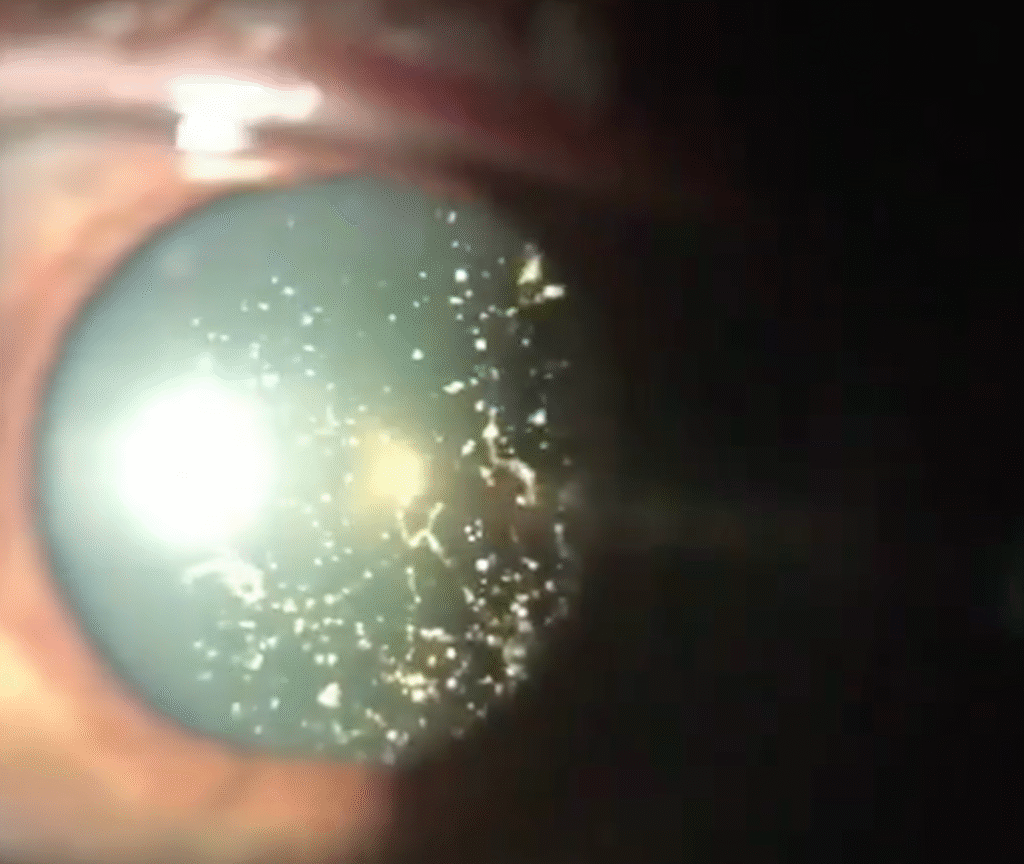
Asteroid hyalosis is an eye condition where tiny, white or yellowish deposits float inside the vitreous—the clear, gel-like substance that fills the center of the eye. These deposits, called asteroid bodies, are made up of calcium and fatty compounds. They look like shimmering particles suspended in the eye and are often described as “stars in the vitreous” due to their reflective nature.
Though they may appear striking when seen during an eye exam, asteroid hyalosis is almost always harmless and usually doesn’t affect vision.
Who Is at Risk?
Asteroid hyalosis typically affects older adults, most often those over the age of 60. It is more common in men and usually affects only one eye.
While the exact cause isn’t fully understood, some studies suggest a possible association with systemic conditions such as:
- Diabetes
- High blood pressure
- High cholesterol
- Obesity
However, many people with asteroid hyalosis have no related health issues, and the condition can occur in otherwise healthy individuals.
What Are the Symptoms?
In most cases, asteroid hyalosis does not cause any symptoms. People usually aren’t aware of it unless it is noticed by an eye doctor during a routine eye examination.
Rarely, if the deposits are especially dense, a person might notice:
- Mild floaters
- Glare or sensitivity to bright lights
- Slightly blurred vision in certain lighting conditions
These symptoms are typically minor and don’t interfere significantly with daily life.
How Is It Diagnosed?
Asteroid hyalosis is usually identified during a comprehensive eye exam. When your eye is examined using a slit lamp or an ophthalmoscope, the asteroid bodies appear as small, shiny particles floating in the vitreous.
In cases where the particles are dense and obstruct the view of the retina, your eye doctor may recommend further tests such as:
- Optical coherence tomography (OCT)
- Fundus photography
- Ocular ultrasound
These tests help ensure that the retina and other internal structures of the eye are healthy and clearly visible.
Does It Require Treatment?
Most of the time, asteroid hyalosis does not require any treatment. The condition is typically stable, doesn’t worsen over time, and doesn’t threaten vision. Eye doctors will simply monitor it during regular check-ups.
However, treatment may be considered in certain rare cases, such as:
- When the asteroid bodies are so dense that they significantly affect vision
- When they interfere with important diagnostic imaging of the retina
- When they complicate cataract surgery or the management of other eye conditions, like diabetic retinopathy
In these situations, a vitrectomy—a surgical procedure to remove the vitreous gel and its contents—may be recommended. This is a well-established surgery but is usually reserved for more severe or complex cases, as it carries some surgical risks.
Is Asteroid Hyalosis a Sign of Something More Serious?
In general, asteroid hyalosis is not dangerous. Still, since it may occasionally be associated with systemic conditions like diabetes or high cholesterol, your eye care provider may recommend a general health screening if you haven’t had one recently.
It’s not the condition itself that’s worrisome—but it may be an opportunity to check on your overall health.
What Should You Do if You’re Diagnosed?
If you’ve been told you have asteroid hyalosis, there’s no need to worry. Just continue with regular eye exams, and keep your eye doctor informed if you notice any changes in your vision.
In most cases, people live with asteroid hyalosis for years without any issues or need for treatment. Knowing what it is—and what it isn’t—can offer peace of mind and help you stay focused on keeping your eyes healthy.
Final Note
Asteroid hyalosis is one of those eye findings that looks more dramatic than it really is. With routine monitoring and awareness, it poses little to no impact on your vision or quality of life. (more details)